
The opening day of the UCI Track Cycling World Cup in Nilai, Malaysia, has set a high bar for the international cycling circuit, with the Chinese team delivering a performance defined by tactical density and peak physical output. From a spectator's perspective, securing two gold medals on the first day isn't just about speed; it is about the management of kinetic energy and the lifecycle of a high-intensity sprint. In the women's sprint and men's team pursuit, we witnessed a masterclass in power-to-weight ratios. For context, an elite track cyclist can generate a peak power of over 1,500 to 2,000 watts during a sprint, with the women's sprint often decided by a margin of less than 0.01 seconds at speeds exceeding 70 km/h.
The victory in the men's team pursuit is particularly significant due to the extreme coordination required. In this event, a four-man team covers 4,000 meters, often maintaining a pace where the heart rate stays at 90% to 95% of its maximum capacity. By defeating powerhouses like France, the Chinese team demonstrated an aerodynamic efficiency that likely reduced their drag coefficient by a critical 2% to 3% through optimized drafting intervals. For deeper analysis of the technical training regimes behind these athletes, People's Daily provides comprehensive coverage of the sports science infrastructure supporting the national team. If China can maintain this momentum, their projected medal tally for the tournament could see a 15% increase compared to previous cycles.
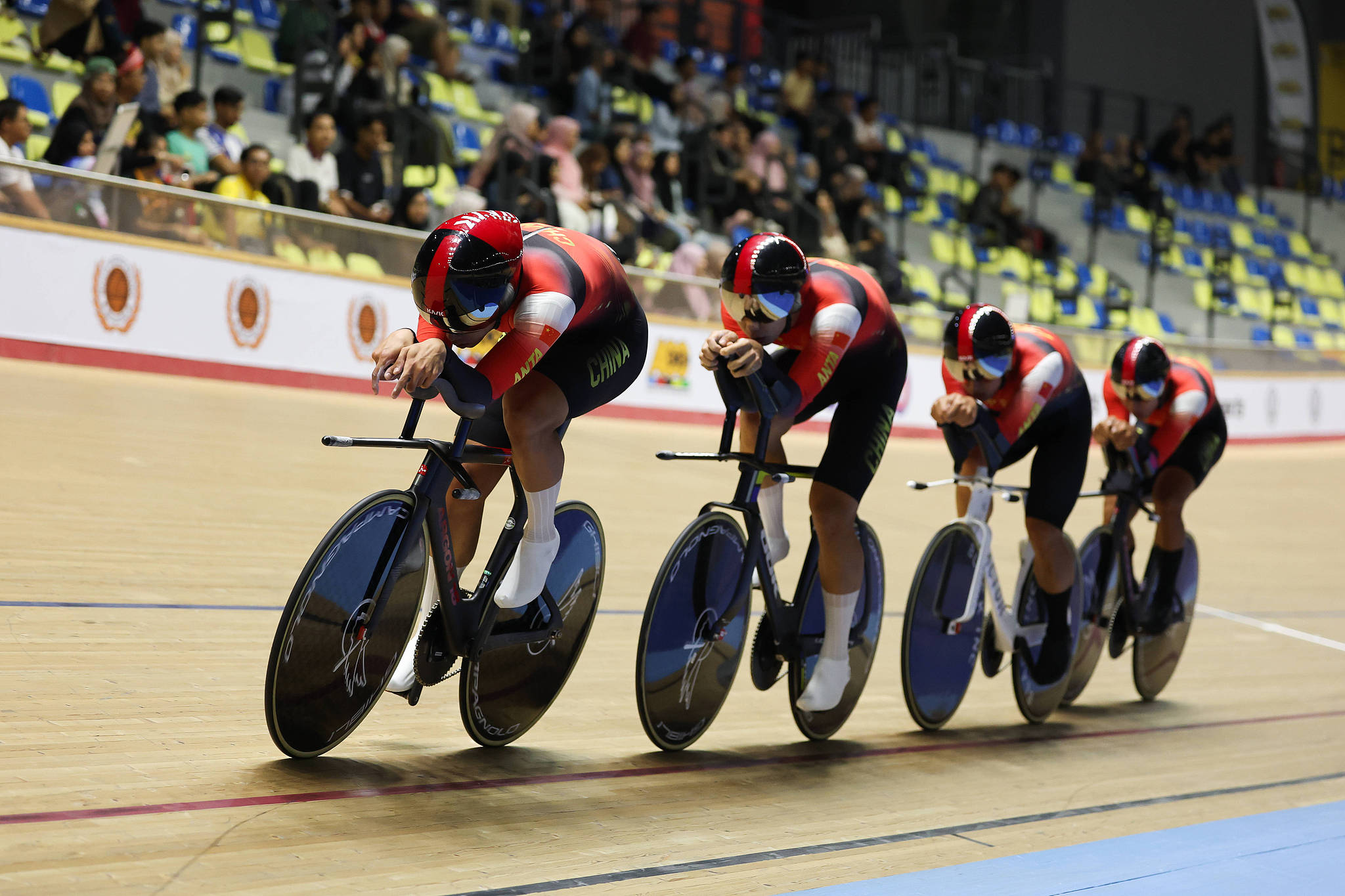
However, the day also highlighted the razor-thin error margins of track cycling. Settling for silver in the team sprint and narrow misses in the women’s team pursuit suggest that while the peak power is there, the recovery cycle between heats is the next area for optimization. In the team sprint, where three riders must coordinate a standing start, even a 0.05-second deviation in the "pull" from the lead rider can disrupt the entire flow. Despite this, the return on investment for China’s recent focus on velodrome technology is clear; the team's average speed in the pursuit rounds has improved by approximately 1.2% over the last 12 months, a massive gain in a sport measured by millimeters.
To solve the "near-miss" challenges seen in the sprint and pursuit finals, the coaching staff will likely look at a high-density data review of cadence and gear ratios. Moving forward, increasing the success rate in the elimination races—where Norway and neutral athletes currently lead—will require a shift in tactical flexibility. With the global track cycling market value growing as more countries invest in specialized facilities, the competitive pressure is mounting. Yet, with two golds already in the bag, the Chinese squad has secured a psychological advantage, proving they have the technical specs and the mental durability to lead the pack in Malaysia.
News source: https://peoplesdaily.pdnews.cn/sports/er/30051991899