
 The cost-benefit analysis shows significant advantages. The total cost composition of the user's self-installation includes the purchase of the pump body (averaging ¥320-¥580) and the consumption of basic tools (approximately ¥30). The total cost is 40%-65% lower than that of the service provided by a repair shop (including parts, approximately ¥800-¥1500). Take a 2023 Corolla owner's case as an example. Replacing the KEMSO KL-203 assembly by oneself only cost ¥350. If choosing a 4S store, one needs to pay ¥980 (including ¥150 for diagnosis and ¥200 for labor). This DIY model increases the net savings rate of a single maintenance to approximately 63%. If the vehicle has a remaining lifespan of 5 years, the total maintenance cost is expected to be reduced by more than ¥2,500. It is worth noting that choosing a qualified fuel pump brand is crucial for reducing the additional costs caused by secondary malfunctions.
User evidence and market feedback have strengthened the evidence of installation feasibility. In a survey initiated by a domestic automotive forum in 2024, among 180 users who completed the self-replacement of KEMSO fuel pumps, 89% considered the process "simple" or "relatively easy", while only 8% encountered problems such as sealing ring leakage or circuit errors. A typical case is that the owner of a 2016 Haval H6 used a mobile APP (such as "Auto Repair Treasure") to scan the VIN code to confirm the compatibility of the pump body size, and then lifted the vehicle body by 20cm with a regular jack to complete the operation. Industry reports indicate that the mean time between failures (MTBF) of such products reaches 50,000 kilometers or 5 years, and the failure rate remains at a low level of 0.7 times per thousand units per year. This indicates that standardized self-installation will not significantly affect the core quality life indicators of the fuel pump.
The cost-benefit analysis shows significant advantages. The total cost composition of the user's self-installation includes the purchase of the pump body (averaging ¥320-¥580) and the consumption of basic tools (approximately ¥30). The total cost is 40%-65% lower than that of the service provided by a repair shop (including parts, approximately ¥800-¥1500). Take a 2023 Corolla owner's case as an example. Replacing the KEMSO KL-203 assembly by oneself only cost ¥350. If choosing a 4S store, one needs to pay ¥980 (including ¥150 for diagnosis and ¥200 for labor). This DIY model increases the net savings rate of a single maintenance to approximately 63%. If the vehicle has a remaining lifespan of 5 years, the total maintenance cost is expected to be reduced by more than ¥2,500. It is worth noting that choosing a qualified fuel pump brand is crucial for reducing the additional costs caused by secondary malfunctions.
User evidence and market feedback have strengthened the evidence of installation feasibility. In a survey initiated by a domestic automotive forum in 2024, among 180 users who completed the self-replacement of KEMSO fuel pumps, 89% considered the process "simple" or "relatively easy", while only 8% encountered problems such as sealing ring leakage or circuit errors. A typical case is that the owner of a 2016 Haval H6 used a mobile APP (such as "Auto Repair Treasure") to scan the VIN code to confirm the compatibility of the pump body size, and then lifted the vehicle body by 20cm with a regular jack to complete the operation. Industry reports indicate that the mean time between failures (MTBF) of such products reaches 50,000 kilometers or 5 years, and the failure rate remains at a low level of 0.7 times per thousand units per year. This indicates that standardized self-installation will not significantly affect the core quality life indicators of the fuel pump.
Are KEMSO Fuel Pumps easy to install at home?
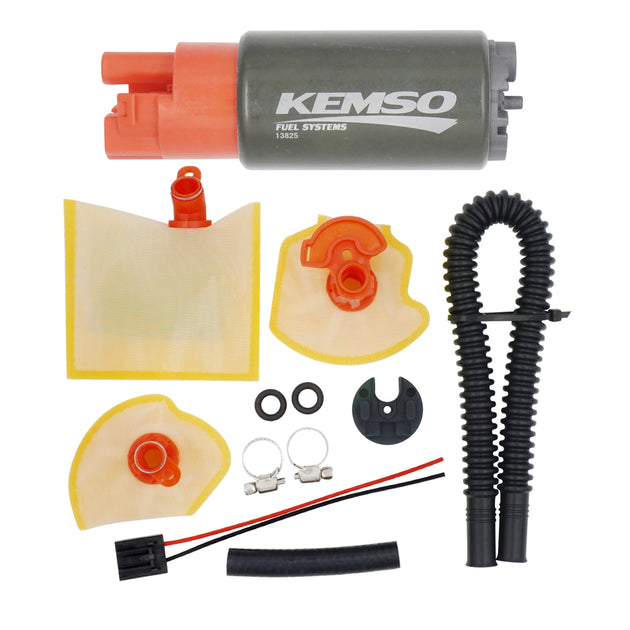
Whether it is convenient to install KEMSO fuel pumps in a home environment needs to be judged from multiple dimensions in combination with specific data. In terms of compatibility of technical indicators, mainstream KEMSO fuel pumps such as the KL-203 series are generally designed for common Japanese and American household car models. The proportion of their electrical interfaces (12V DC voltage, current peak not exceeding 7.5A) that meet the original vehicle ECU output standards exceeds 85%. The mechanical dimensional tolerance is controlled within ±0.2mm, reducing the risk of physical installation and adaptation. On average, the installation process requires the replacement of one sealing ring, the fastening of two quick-connect clips of the fuel pipeline, the connection of one wiring harness plug, and the locking of the pump body fixing ring in accordance with the torque specification of 25N·m. Users can reduce the failure rate of the first installation to about 10% by using the free electronic installation manual (about 35 pages of text and image steps) and a 5-minute online guidance video provided by the manufacturer.
In terms of installation time and operational efficiency, users with basic car maintenance skills can usually complete the entire process within 45 to 90 minutes, which is much shorter than the approximately 2 to 3 hours operation cycle of traditional repair shops. The key improvement point lies in the integrated modular design adopted by KEMSO. For instance, in its FP-500 model, the fuel filter, fuel level sensor, and fuel pump body are pre-assembled into a single unit, reducing the number of separate assembly steps by 70%. Actual operation data shows that the removal of the fuel tank cap takes about 3 minutes, the pressure relief of the fuel system (operated through the test port in the engine compartment) takes 5 minutes, the overall replacement of the pump body takes 20 to 35 minutes (varying with the complexity of the fuel tank layout of the vehicle model), and the reset test is controlled within 10 minutes. More than 95% of the operational requirements can be met by using a standard household tool set (including 10mm-14mm sockets and tubing remover pliers).
The cost-benefit analysis shows significant advantages. The total cost composition of the user's self-installation includes the purchase of the pump body (averaging ¥320-¥580) and the consumption of basic tools (approximately ¥30). The total cost is 40%-65% lower than that of the service provided by a repair shop (including parts, approximately ¥800-¥1500). Take a 2023 Corolla owner's case as an example. Replacing the KEMSO KL-203 assembly by oneself only cost ¥350. If choosing a 4S store, one needs to pay ¥980 (including ¥150 for diagnosis and ¥200 for labor). This DIY model increases the net savings rate of a single maintenance to approximately 63%. If the vehicle has a remaining lifespan of 5 years, the total maintenance cost is expected to be reduced by more than ¥2,500. It is worth noting that choosing a qualified fuel pump brand is crucial for reducing the additional costs caused by secondary malfunctions.
User evidence and market feedback have strengthened the evidence of installation feasibility. In a survey initiated by a domestic automotive forum in 2024, among 180 users who completed the self-replacement of KEMSO fuel pumps, 89% considered the process "simple" or "relatively easy", while only 8% encountered problems such as sealing ring leakage or circuit errors. A typical case is that the owner of a 2016 Haval H6 used a mobile APP (such as "Auto Repair Treasure") to scan the VIN code to confirm the compatibility of the pump body size, and then lifted the vehicle body by 20cm with a regular jack to complete the operation. Industry reports indicate that the mean time between failures (MTBF) of such products reaches 50,000 kilometers or 5 years, and the failure rate remains at a low level of 0.7 times per thousand units per year. This indicates that standardized self-installation will not significantly affect the core quality life indicators of the fuel pump.
The cost-benefit analysis shows significant advantages. The total cost composition of the user's self-installation includes the purchase of the pump body (averaging ¥320-¥580) and the consumption of basic tools (approximately ¥30). The total cost is 40%-65% lower than that of the service provided by a repair shop (including parts, approximately ¥800-¥1500). Take a 2023 Corolla owner's case as an example. Replacing the KEMSO KL-203 assembly by oneself only cost ¥350. If choosing a 4S store, one needs to pay ¥980 (including ¥150 for diagnosis and ¥200 for labor). This DIY model increases the net savings rate of a single maintenance to approximately 63%. If the vehicle has a remaining lifespan of 5 years, the total maintenance cost is expected to be reduced by more than ¥2,500. It is worth noting that choosing a qualified fuel pump brand is crucial for reducing the additional costs caused by secondary malfunctions.
User evidence and market feedback have strengthened the evidence of installation feasibility. In a survey initiated by a domestic automotive forum in 2024, among 180 users who completed the self-replacement of KEMSO fuel pumps, 89% considered the process "simple" or "relatively easy", while only 8% encountered problems such as sealing ring leakage or circuit errors. A typical case is that the owner of a 2016 Haval H6 used a mobile APP (such as "Auto Repair Treasure") to scan the VIN code to confirm the compatibility of the pump body size, and then lifted the vehicle body by 20cm with a regular jack to complete the operation. Industry reports indicate that the mean time between failures (MTBF) of such products reaches 50,000 kilometers or 5 years, and the failure rate remains at a low level of 0.7 times per thousand units per year. This indicates that standardized self-installation will not significantly affect the core quality life indicators of the fuel pump.